
Access Area Restoration in Central Illinois
Restoring the Paths, Ruts, and Work Areas Crews Leave Behind
A project can be finished and still leave the property looking rough. When trucks, equipment, or crews need to cross a yard, field edge, drive lane, easement, or commercial property, the access path often takes the damage. Heavy traffic can leave ruts, compacted soil, muddy tracks, damaged turf, uneven ground, and low spots that hold water. Midstate Land Solutions provides access area restoration in Central Illinois for utility companies, contractors, municipalities, commercial property owners, homeowners, and landowners.
We restore damaged access areas using the services we already specialize in, including land grading, yard drainage correction, hydroseeding, land clearing, mulching, landscaping repair, rut repair, and cleanup. When the access damage is part of a larger property restoration need, Midstate can also help with broader land restoration after utility work so the property looks cleaner, drains better, and is easier to maintain after the work is complete.

What Access Area Restoration Covers
Access area restoration focuses on repairing the ground where vehicles, equipment, or workers entered, crossed, parked, staged, or moved through a property. This is not utility work or construction work. It is land restoration for the areas used to access the job. A restored access area should not just look better. It should also drain better, hold up better after rain, and be easier to mow, drive across, or maintain.
This service is for properties with:
Midstate helps restore these access areas through grading, rut repair, yard drainage correction, hydroseeding, land clearing, mulching, landscaping repair, and cleanup when needed.
- Muddy equipment paths
- Compacted ground
- Damaged grass or turf
- Soft access areas
- Rough drive edges
- Field-edge damage
- Low spots that hold water
- Bare soil from repeated traffic
- Damaged lawn-to-drive transitions
- Cleanup needs after crews leave
Need a Quote Quickly?
Whether the property has ruts, mud, bare soil, uneven grade, drainage issues, or unfinished ground, Midstate Land Solutions can help assess the surface repair work and recommend the next step.
Call (309) 824-1092 or simply click below.
Common Access Area Problems
Access damage usually shows where the ground carried the most weight. A truck may have crossed wet grass. Equipment may have turned around in the same spot several times. A crew may have used the same path repeatedly until the ground became compacted, muddy, or uneven.
Common issues include:
- Ruts that collect water
- Muddy tire tracks
- Compacted soil that will not recover well
- Low spots near access routes
- Damaged turf along driveways or sidewalks
- Rough areas that are hard to mow
- Bare soil from repeated traffic
- Drainage problems after ground disturbance
- Washed-out paths after rain
In Central Illinois, these problems can get worse quickly. Clay-heavy soil holds water, ruts easily when wet, and can stay soft long after the work is finished. If the main issue is exposed soil, washout, or weak grass recovery, Midstate’s soil stabilization after utility work service focuses on helping disturbed ground hold together and recover.
Built for Companies, Contractors, and Property Owners
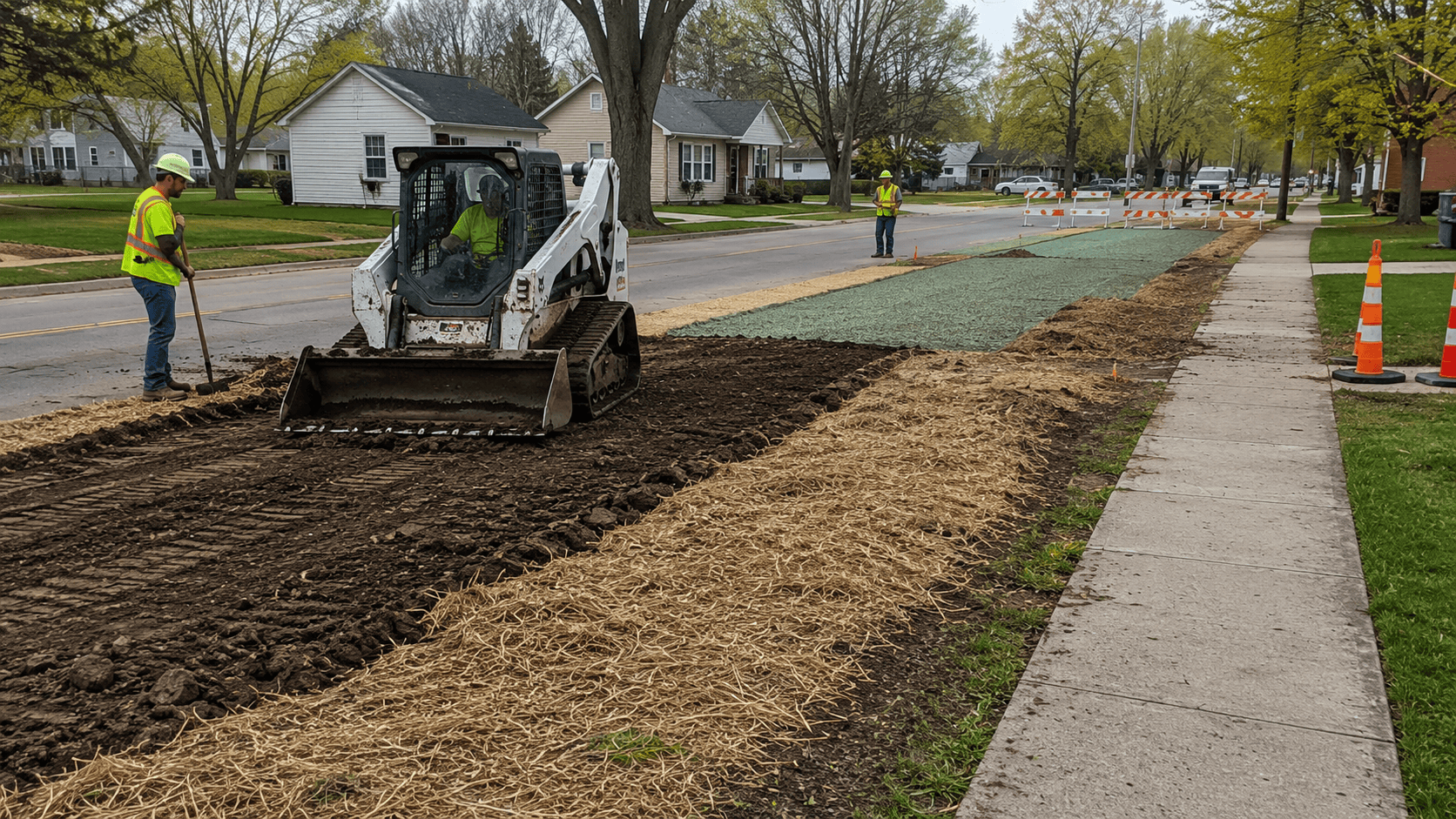
Access damage can leave a bad final impression, even when the main work was completed correctly.
For companies and contractors, ruts and mud can make a finished job look incomplete. Municipalities and commercial property owners may also need damaged access paths repaired so outdoor areas are safer and easier to maintain. Homeowners and landowners often need help getting yards, field edges, drive lanes, or usable outdoor space back to normal.
When the damage is more about rough ground, bare soil, or uneven surface areas beyond the access path itself, Midstate’s surface repair after utility work service may be the better fit.
How Midstate Handles Surface Repair

Site Review
We review tire ruts, soft ground, compacted soil, low spots, rough grade, drainage issues, damaged turf, and cleanup needs. This helps us understand whether the area needs simple repair or a more complete restoration approach.

Surface Prep Plan
Some access areas may need grading and cleanup. Others may need drainage correction, hydroseeding, mulching, land clearing, landscaping repair, or erosion control.

Ground Repair
This may include smoothing ruts, reshaping rough ground, correcting low spots, improving water movement, clearing debris or overgrowth, and preparing bare areas for seed. For larger grade correction, Midstate’s land grading services can help.

Growth Stablization
Depending on the site, this may include hydroseeding, seeding, mulch, or erosion control methods. When bare or disturbed soil needs new growth, hydroseeding services can help cover the repaired area and improve the finished appearance.

Cleanup
A clean access restoration should leave the ground smoother, better shaped, and less likely to turn into a muddy problem after the next rain.
Surface Repair Services That May Be Used
Utility site restoration is not one single service. It is a focused combination of land repair methods used after utility work.
Depending on the site, restoration may include:

 Land Grading
Land grading helps smooth ruts, reshape access paths, and correct rough areas so the ground is easier to use and maintain.

 Hydroseeding
Hydroseeding helps cover bare or disturbed soil, support new growth, and improve the finished appearance after access damage.

 Land Clearing
If debris or overgrowth blocks access for repair, land clearing helps open the area before grading, drainage work, or seeding begins.
 Mulching
Mulching can improve the finished appearance of restored access areas, especially near trees, cleared edges, slopes, or landscaped sections.
 Landscape Repair
When access damage affects outdoor areas near a home, business, sidewalk, entrance, or public space, practical landscaping repair can help the property look complete again.
 Yard Drainage
When ruts or low spots collect water, yard drainage correction can help move water away from problem areas.
Why Local Access Area Repair Matters
Central Illinois ground can be unforgiving after vehicles or equipment cross it. Wet soil ruts quickly. Clay holds water. Compacted areas may not recover on their own. Also, freeze-thaw cycles can make low spots, rough grade, and damaged turf worse over time. Because of this, access area restoration should be handled with local soil, drainage, and seasonal conditions in mind. Midstate Land Solutions understands how Central Illinois properties respond after access damage. Therefore, we focus on practical repair that helps the site look better, drain better, and stay easier to maintain.
Related Commercial Land Restoration Services
Access area restoration is one part of Midstate’s larger land restoration after utility work system for properties left rough, muddy, rutted, bare, or unfinished after outside work. When the problem is spread across the yard or property surface, surface repair after utility work can help restore rough grade, bare soil, damaged turf, and uneven ground. When the main issue is exposed soil or washout, soil stabilization after utility work helps protect the ground and support recovery.
Depending on the property, access area restoration may also involve land grading, yard drainage, hydroseeding, land clearing, or forestry mulching.
Service Area
Midstate Land Solutions provides utility site restoration across Central Illinois, including:
- Bloomington
- Normal
- LeRoy
- Heyworth
- Downs
- Hudson
- McLean County
- Clinton
- Lincoln
- Decatur
- Champaign
- Nearby rural and commercial areas
Surface Repair After Utility Work FAQs
Who fixes ruts after equipment crosses a property?
Midstate Land Solutions repairs ruts left behind after vehicles, equipment, or crews disturb the ground. Depending on the site, repair may include grading, drainage correction, hydroseeding, mulching, landscaping repair, and cleanup. Read our full guide on who fixes ruts after equipment crosses a property.
Can muddy access areas be repaired after work is done?
Yes. Muddy access areas can often be repaired through grading, drainage correction, rut repair, hydroseeding, seeding, mulching, or cleanup. The right solution depends on how badly the ground was disturbed and how water moves across the property. Read our full guide on repairing muddy access areas after work is done.
Can grading and drainage correction fix access damage?
In many cases, yes. Grading helps smooth and reshape damaged ground, while drainage correction helps reduce low spots and water collection. When needed, hydroseeding or mulching can help finish the repaired area. Read our full guide on grading and drainage correction for access damage.
How do you keep an access area from turning back into mud?
A repaired access area needs more than a quick surface pass if the ground is holding water, staying soft, or rutting after every rain. The repair may need grading, rut repair, drainage correction, hydroseeding, mulching, or cleanup so the area can drain better and hold up longer. Read our full guide on how to keep repaired access areas from turning back into mud.
Schedule Surface Repair After Utility Work in Central Illinois
If work on your property left behind ruts, mud, compacted soil, bare ground, drainage problems, or rough access areas, Midstate Land Solutions can help.
We provide access area restoration in Central Illinois for utility companies, contractors, municipalities, commercial property owners, homeowners, and landowners. Whether the site needs grading, drainage correction, hydroseeding, mulching, landscaping repair, or cleanup, we can take a look and recommend the right next step.
Tell us what happened, where the access damage is, and what condition the ground is in now. We’ll help you figure out the best way to repair it.